Table of Contents
It's essentially the "I" or your feeling of personal identity. Your conscious thinking and awareness of the globe around you. Experiences you consciously recall. Feelings you're actively experiencing and refining. It keeps a systematic feeling of self as you engage with your atmosphere, offering you awareness of how you match the globe and assisting you keep your personal tale regarding on your own with time.
They can additionally declare or neutral elements of experience that have just dropped out of aware understanding. Carl Jung's individual unconscious is necessary since it significantly forms your thoughts, emotions, and habits, although you're normally unaware of its influence. Becoming conscious of its components enables you to live even more authentically, heal old wounds, and expand mentally and psychologically.

A forgotten childhood denial could create unusual stress and anxiety in social scenarios as a grownup. Complicateds are mentally billed patterns developed by past experiences.
Usual examples consist of the Hero (the take on protagonist who gets rid of difficulties), the Mommy (the nurturing protector), the Wise Old Man (the advisor number), and the Darkness (the hidden, darker aspects of character). We encounter these stereotypical patterns throughout human expression in old myths, spiritual texts, literature, art, fantasizes, and modern-day storytelling.
Protective Factors and Timely Support for Traumatic Stress
This aspect of the archetype, the purely biological one, is the appropriate worry of clinical psychology'. Jung (1947) believes icons from different societies are often extremely comparable due to the fact that they have actually arised from archetypes shared by the entire human race which belong to our cumulative subconscious. For Jung, our primitive previous becomes the basis of the human subconscious, directing and influencing existing habits.
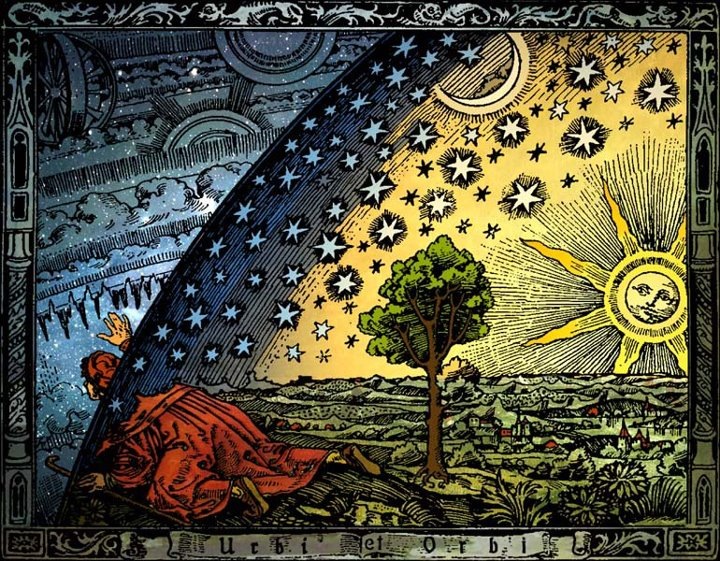
Jung classified these archetypes the Self, the Character, the Shadow and the Anima/Animus. It hides our genuine self and Jung explains it as the "consistency" archetype.
The term stems from the Greek word for the masks that ancient stars made use of, signifying the functions we play in public. You might consider the Character as the 'public connections depictive' of our ego, or the product packaging that offers our vanity to the outdoors. A well-adapted Identity can greatly add to our social success, as it mirrors our true characteristic and adapts to various social contexts.
An example would be an educator who constantly treats everybody as if they were their students, or someone who is extremely authoritative outside their job setting. While this can be irritating for others, it's more problematic for the specific as it can cause an incomplete realization of their full personality.
When Collective Healing Enhances Individual Depression therapy
This usually causes the Personality encompassing the much more socially acceptable qualities, while the much less desirable ones enter into the Shadow, one more crucial part of Jung's individuality concept. An additional archetype is the anima/animus. The "anima/animus" is the mirror image of our biological sex, that is, the unconscious feminine side in males and the manly tendencies in women.
As an example, the phenomenon of "love at very first view" can be described as a male predicting his Anima onto a woman (or the other way around), which results in a prompt and intense destination. Jung recognized that supposed "masculine" attributes (like autonomy, separateness, and hostility) and "feminine" characteristics (like nurturance, relatedness, and empathy) were not constrained to one gender or above the various other.
Indirect Trauma: How Others' Trauma Affects You
In line with transformative theory, it might be that Jung's archetypes reflect tendencies that as soon as had survival value. The Shadow isn't just adverse; it provides depth and balance to our character, showing the principle that every facet of one's personality has an offsetting equivalent.
Overemphasis on the Persona, while overlooking the Darkness, can result in a surface individuality, preoccupied with others' perceptions. Darkness aspects often materialize when we project done not like attributes onto others, functioning as mirrors to our disowned aspects. Engaging with our Shadow can be tough, but it's essential for a well balanced personality.
The Role of EMDR Therapy in EMDR therapy
This interaction of the Identity and the Darkness is typically checked out in literary works, such as in "Dr. Jekyll and Mr. Hyde", where characters grapple with their dual natures, better showing the compelling nature of this element of Jung's concept. Lastly, there is the self which gives a sense of unity in experience.
That was certainly Jung's idea and in his publication "The Undiscovered Self" he suggested that many of the problems of modern life are created by "male's dynamic alienation from his natural foundation." One element of this is his sights on the significance of the anima and the animus. Jung says that these archetypes are products of the cumulative experience of men and women living with each other.
For Jung, the outcome was that the complete psychological growth both sexes was weakened. With each other with the prevailing patriarchal culture of Western civilization, this has actually brought about the decline of feminine top qualities altogether, and the predominance of the identity (the mask) has elevated insincerity to a method of life which goes unquestioned by millions in their day-to-day life.
Each of these cognitive features can be revealed largely in a withdrawn or extroverted type. Let's dive deeper:: This dichotomy has to do with how individuals make decisions.' Thinking' people choose based on logic and objective factors to consider, while 'Really feeling' individuals make decisions based on subjective and individual values.: This duality worries exactly how people regard or gather info.

Navigation
Latest Posts
Breaking Free from Food Rules
Why Responsiveness in IFS Practice in Waterloo, Ontario
Helping Mature Clients with Individual Counseling for Growth